Art Wins Until the Money Runs Out
More books should be based on leaked emails. At least something useful came out of North Korea’s hack of Sony: a view of business decisions before everyone had time to make them sound inevitable. Fritz’s thesis is simple. Star-driven, mid-budget movies made money in the 2000s; in the 2010s, that model stopped working. Sony struggled to adapt, replaced executives, and searched for a new strategy without any guarantee that the replacements would do better. It is a useful book for understanding the content side of the video game industry. A successful strategy can become an unsuccessful one as tastes and risk profiles evolve.
What surprised me was how often art wins when art and business collide inside an individual or organization. Executives keep backing the kinds of movies they want to make after the financial rationale has weakened. Market discipline does not necessarily persuade them to change their minds. Only eventually do ‘rational’ accountants discover the sums and remove them.
Nor does that process reliably produce the best movies. Fritz describes a fascinating market that never settles into equilibrium, but the direction of selection is clear enough: not toward the best art, but toward the most predictable return on capital. There is no contradiction between thinking Sony needed to abandon its old strategy and regretting what replaced it. Capitalism can solve the studio’s problem without solving the audience’s.
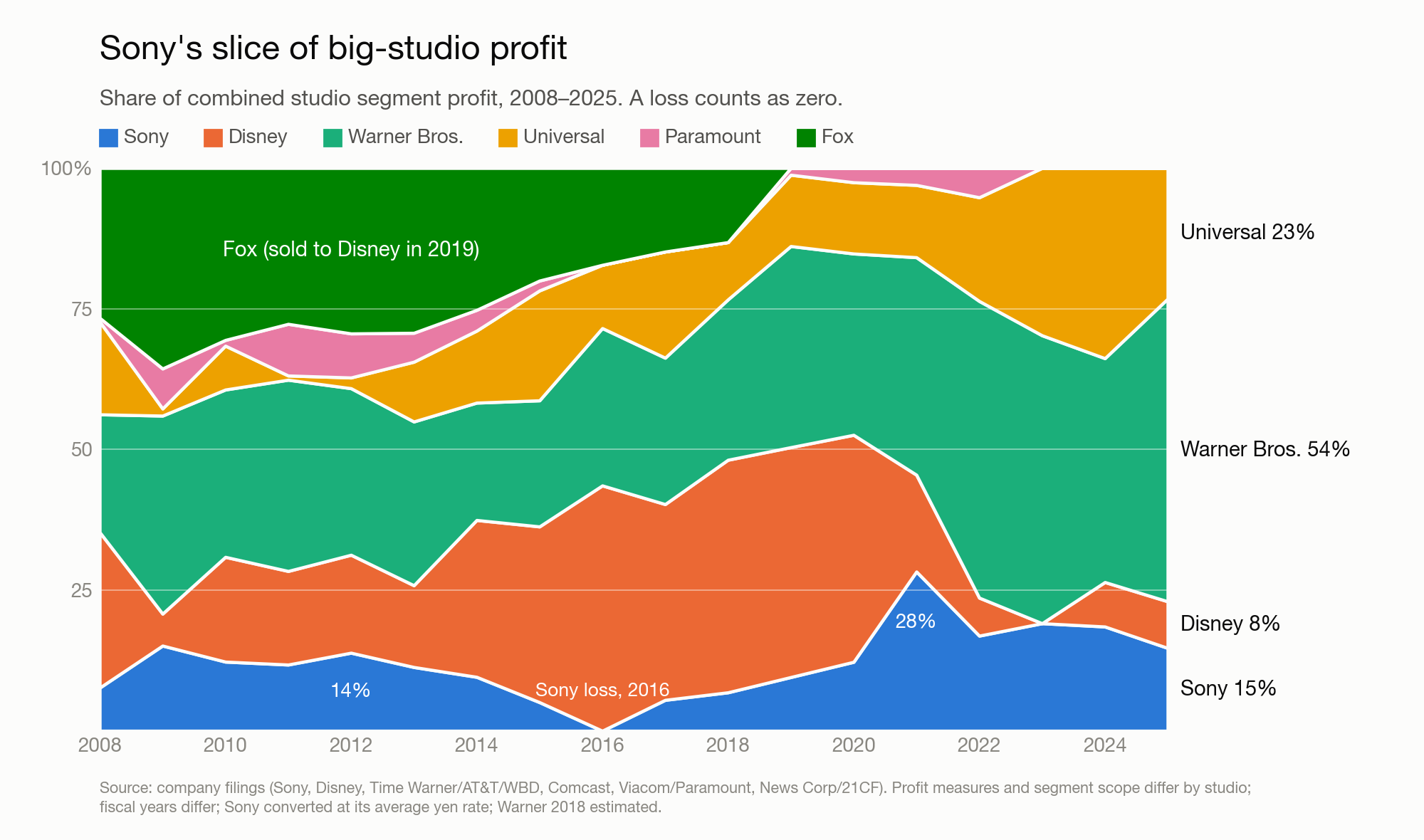
Eventually, Sony’s ill fortune turned good, by luck more than skill. Too small to fund a streaming service of its own, it sat out while the wheel lured its rivals towards capital intensive streaming, and found itself selling shovels at the gold rush, licensing its films and shows to whoever was paying. Its slice of big-studio profit went from about 5% in 2015 to between 15% and 20% since 2022. Spiderman has continued to pay the bills while Bond and Amy Pascal have left for Amazon. I would read a sequel covering the 2020s and the post-pandemic troubles of theatrical exhibition.
The book explains why one model broke, and now it’s unclear if even franchises will endure. Movies and video games can each optimize their businesses while losing the larger competition for attention. In the end, TikTok and brainrot is coming for us all.