** 81st, 82nd books of 2020: Work = Success**
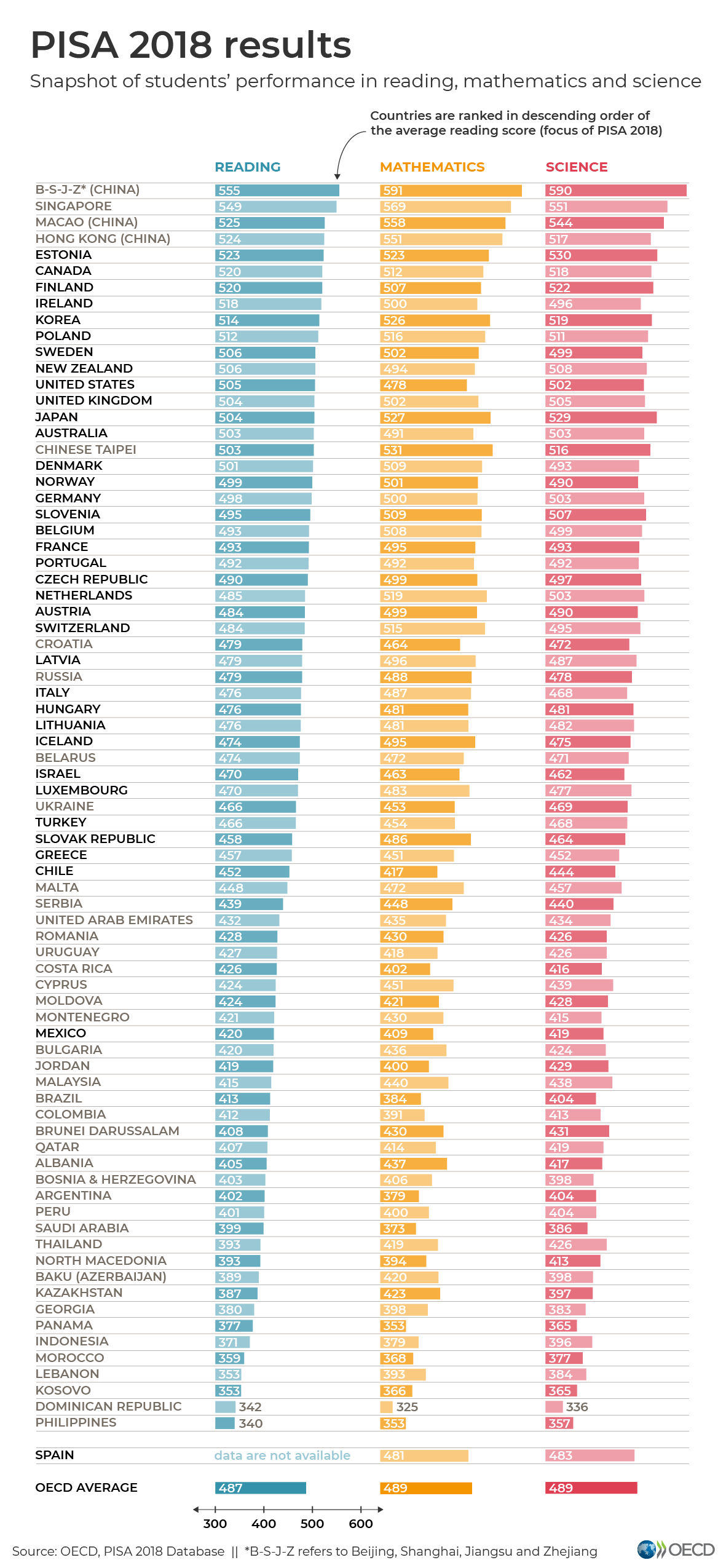
China does well with standard education. In the 2018 PISA results, China Singapore, Macao, and Hong Kong scored 1st, 2nd, 3rd, and 4th respectively. (Link (https://www.oecd.org/pisa/PISA-results_ENGLISH.png)) In the US, Asian Americans are sufficiently overrepresented in academic pursuits such that it has become a meme in American culture.
One way to describe this difference is in how we get kids to do the things they don’t want to do. In Little Soldiers, Lenora Chu is unable to get her son Rainey to eat eggs. She is astonished to discover that her Chinese preschool teachers had succeeded but horrified to learn how they did it. Every time Rainey spat out the eggs, the teachers would put eggs back in, until eventually Rainy gave up and swallowed. To our American author this was terrible: force-feeding akin to what would be found in Guantanamo. To a Chinese preschool teacher, it was standard discipline - eggs are a good source of protein and Rainy needed protein to focus during the day.
Throughout both Battle Hymn and Little Soldiers, Lenora Chu and Amy Chua make clear the differences in expectations between Chinese and Western parents and teachers. In the Chinese method, children are expected to 吃苦 or (eat bitterness) in order to learn and build character. This is part of growing up, and a parent’s role is to help provide the appropriate expectations and pressure to succeed. Both Chu and Chua are fish out of water, Chu is a westerner (老外) enrolling her son directly into the Shanghai academic machine, whereas Chua attempts to enforce her zealous interpretation of ‘Chinese education’ on two daughters in New Haven.
Both books obliquely reveal how Chinese education excels in three areas:
- High Expectations: Chua expects her kids to get straight A’s and to compete at extreme levels of competition. In China, Chu writes that “The Chinese commit to memory the first twenty elements of the periodic table, mathematical formulas and theorems, and historical facts, among others. Passages from classical poetry and famous writings are also important; my father can still recount the poems he learned as a primary-schooler.” These form the basis of lessons that allow Chinese pupils to go in more depth with and understand the lessons better. One high-school student interviewed by the author recites her appreciation of a tang poem (静夜思) that she could only appreciate because she was forced early to memorize it. As it turns out, the poem resonated with me too, but only because I was forced to memorize it as an adult learning Chinese in Beijing.
- 吃苦: Work > Talent: For Chu’s son Rainy, feedback was never about certain areas not being his strong suit, but rather a ‘lack of focus’ or ‘not putting in sufficient effort’. Chua takes work to its logical extreme, demanding 3 hours of instrument practice a day from her daughter’s and insisting on completing it regardless of what family vacation gets in the way.
- Extreme parental support: For Chua, this means hiring the best possible tutors and ensuring that any family vacation doesn’t get in the way of a 10 month long daily streak of marathon practice sessions. In Chu’s Chinese preschool, this took the form of teacher bribes, 1:1 lessons. Most striking to me was an element I’ve never thought of: in most Chinese homes, the students have their own desks. In most American homes, only the adults have desks.
Since both books are memoirs, both get bogged down by the narrator. Chu approaches her Chinese teachers with typical American helicopter parenting. She is either barely proficient in Chinese or intentionally disingenuous in translating certain Chinese phrases to the reader. She tries to eke out special treatment for her son in a way that easily makes her an enemy of the administration, and makes me the reader side with said administration. However after realizing that her son has not turned into an academic automaton, Chu is won over by many virtues of the Chinese education system, and concludes the book with an even-keeled analysis of the pros and cons of each.
Chua comes out worse: arrogant, mean, self-centered, and emotionally abusive. Not only does Chua seem to have a radical-fundamentalist interpretation of what it means to be a Chinese parent, she acts as if she is simply representing the superior way and that anybody who questions her methods just doesn’t have the guts to stick it out. She calls her daughter ‘garbage’, makes any and every threat that comes to mind, pulling her out of school just for more violin practice, and berates her daughter for not writing a eulogy that is ‘good enough’ at her grandmother’s funeral. One cannot help but wonder at a mother more concerned about the optics of her children’s eulogy compositions than their emotional well being at a family funeral. Sure, none of these things will prevent her kids from making it to Harvard, but Chua’s interpretation of tiger parenting feels more like a form of self-perpetuating emotional abuse than anything else. Considering the positive attributes that Chinese culture can bring to education, it’s too bad that Chua created the cultural meme of tiger parenting.
** 活该 - Just Desserts **
In the end, the second children for both parents bring a welcome dose of karmic reality. For Chu, her antagonistic attitude towards the Chinese school results in her second child being denied admission. For Chua, her daughter Lulu rebels to the point that she has to give up violin, taking up tennis instead. In both cases I found myself rooting against the authors, but the stories are enough to point a dim light around the possibilities of Chinese parenting
Little soldiers: ★★★☆☆. Battle Hymn: ★☆☆☆☆.